

Enlargement of Prostate/ Benign Prostatic Hyperplasia

Prostate – the gland
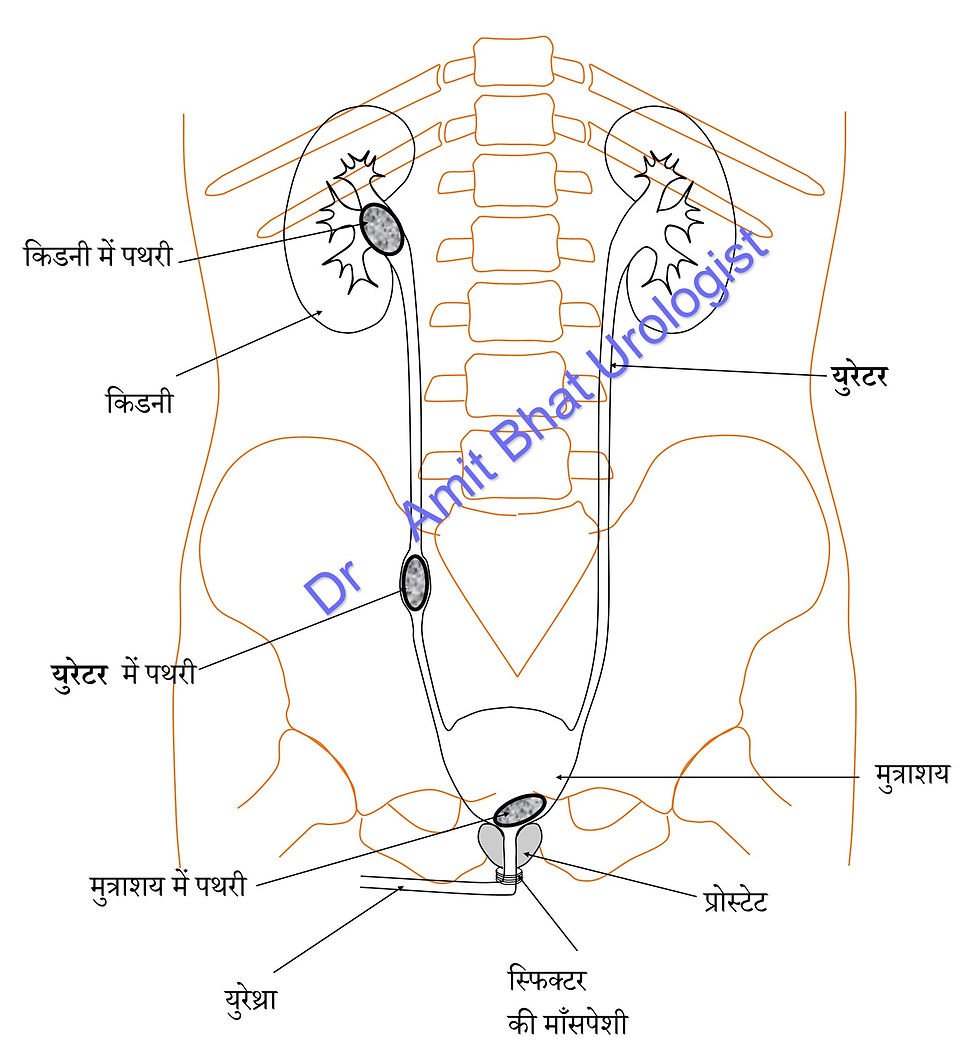
The prostate is small gland weighing about 18-20 g located below the urinary bladder and in front of the rectum. It fully encircles the urethra. It produces major portion of semen.

Benign prostatic hyperplasia
"Almost all Men will develop Benign Prostatic Hyperplasia but only a small minority will have Prostate cancer."
Prostate Enlargement / Benign prostatic hyperplasia (BPH) is a very common condition. It can be regarded as a natural aging process. The important thing to understand here is this enlargement is not same as cancer. Cancer of prostate can cause also an enlargement of the prostate gland and sometimes the two can be found together side by side.
As the prostate enlarges, it can squeeze down on the urethra. When this happens, men may notice trouble passing urine.
Since this enlargement of prostate is age related natural process, it can be controlled to some extent, but it cannot be eliminated or stopped.
Risk factors for BPH
Risk factors include
increasing age
a family history of BPH.
BPH Symptoms
Prostate enlargement results in obstruction and/or irritation of the bladder.
Obstruction of urine flow will appear as
Takes a long time to start urination.
Poor flow of urine
Straining to pass urine
Urine does not flow in one go but starts, stops, starts, stops ….
Patient feels he has not emptied his bladder to satisfaction
Irritation will appear as
Need to visit washroom frequently
Rush to the washroom for fear of leaking urine
Getting up in the night from sleep to pass urine repeatedly.
A lot of times these symptoms increase or decrease for no apparent reason.
These symptoms can also be caused by other conditions like Infection or prostate cancer.
BPH Diagnosis
Urological evaluation for BPH will typically consist of a thorough medical history & physical examination. This also includes rectal exam to check how the prostate feels. In addition, the doctor will generally advise some basic urine & blood tests. Depending on the clinical condition, the patient may be advised to undergo further tests that may include:
1.) Prostate specific antigen (PSA): blood test to make sure cancer is not cause of enlargement.
2.) Sonography (USG): to measure the prostate size and look for signs obstruction to flow of urine like thickening of urinary bladder wall, high post void volume (increased urine in bladder after patient passes urine), presence of swelling in kidneys (hydroureteronephrosis).
3.) Cystoscopy, a direct look in the urethra and urinary bladder using a telescope
4.) Urodynamic studies: help understand the mechanics of urinary bladder e.g. How much urine can the bladder hold, at what pressure does it store it, what is the rate of urine flow, and how much pressure can the bladder produce.
Why Treat BPH if it is natural aging process?
BPH needs treatment for
Control of symptoms.
Management of problems caused by BPH
Retention of urine (Patient is not able to pass even a drop of urine).
Developed stones in urinary bladder due to BPH
Repeated Urinary Infections due to BPH
Obstruction is causing damage to the kidneys.
BPH Treatment Options
There are 3 main treatment options for BPH:
1.) Close observation: Those men who have an enlarged prostate gland but no or mild symptoms, do not need any treatment medical or surgical. Such patients are advised to have regular check-ups to monitor the symptoms and keep track of progress of the issue. The idea is to start treatment only if required.
2.) Medicines: There are different kinds of medication used to treat BPH. These drugs need to be taken for a long time or may be indefinitely.
3.) Surgery: The two common options are Endoscopic Surgery and Open Surgery.
BPH – Medical treatments
Two different types of medicines are used to treat symptoms of BPH.
Alpha Blockers:
These medicines work by relaxing the muscles surrounding the prostate
reduce obstruction & improve urine flow.
Help improve the symptoms of BPH.
Do not reduce the size of the prostate.
They are generally taken once a day just before bedtime.
5-Alpha-Reductase Inhibitor:
These drugs block the effects of testosterone which causes enlargement of prostate.
reduce size of prostate.
can relieve BPH symptoms, increase urinary flow rate.
These work best in men with relatively large prostate glands.
It may take as long as 6 months to a year, to achieve maximum benefits.
Also, they may interfere with sexual functioning.
BPH – Surgery
Surgery is recommended for men with prostate causing:
Urinary retention
Kidney damage
Frequent urinary tract infections
Bladder stones
Not responding to medicines.

BPH – Surgical Options
Removal of the prostate can be accomplished in different ways.
The choice of procedure depends on both the size of the prostate and the patient's overall health.
Transurethral resection of prostate (TURP):
TURP remains the standard procedure for BPH. After the patient receives anesthesia, the surgeon inserts an instrument called a resectoscope through the urethra. This instrument uses very high frequency electrical current to cut the prostate tissue and seal blood vessels removing obstructive prostate tissue one small piece at a time.
Upon completion of the procedure, a catheter is inserted into the bladder. The urinary bladder is continuously irrigated with fluid through the catheter to prevent blood from clotting and obstructing the catheter.
Laser Prostatectomy:
Routine surgery uses very high frequency electrical current as a source of energy to cut the tissue. Using lasers for cutting across the tissues is a new development. It is especially advantageous in case the patient is on blood thinners or if patient has a very large gland (> 150 g).
Open prostatectomy
Open prostatectomy for BPH is performed for a prostate that is too large to remove through TURP. Other reasons for choosing an open prostatectomy include patients with large bladder diverticula, large bladder stones and who cannot bend their legs at the hip joint for TURP surgery.
Recovery after TURP/Laser Prostatectomy
The urinary catheter may be removed after 3-4 days
Once the patient passes urine he can go home.
After catheter removal, Patient may experience burning sensation while passing urine, occasional blood while passing urine, a need to rush to pass urine for the fear of leakage. These will generally improve over a period of 2-3 weeks.
TURP – Complications
As with any operative procedure, complications do exist. Most people will make complete and full recovery after operation.

Comments