

Treatment of Kidney Stones

Updated: Jun 2
(This article is also available in Hindi / यह लेख हिंदी में भी उपलब्ध है।)
Need for Treatment
All kidney stones do NOT need to be removed.
Stone removal is advised to control the pain and / or take care (protect) the kidney.
Pain
severe and not responding to pain medications.
Protect the kidney.
In presence of Infection
Stone that has got stuck and putting pressure on the kidney.
If the person has stone in single kidney
If the person has stone/s in both kidneys and it is expected that may cause problems.
Removal For Non-Medical Reasons
Person who is working on Ship / Airlines. He will not receive medical clearance to join duty.
Personal choice e.g., removal before travelling to a foreign country.
Treatment Options
Various options are:
Medicines
Endoscopic surgery
Open Surgery
Lithotripsy
Treatment is advised with the aim to make the patient stone free with least amount of pain and effort.
This will be decided after evaluating several factors like size, number, hardness of stone and need to treat any other problem at the same time.
When is Open Surgery needed?
Open surgery means a big incision and a long and hard road to recovery.
Thankfully, with modern technology and progress in medical expertise, open surgery for stones has become exceedingly rare. It is only carried out for complex stones or there is a second problem that also needs to be treated surgically at the same time.
Treatment with Medicines
Some stones can be treated with medicines only. Small multiple /single stones can be treated with medicines:
if not causing continuous pain
not putting pressure /damaging kidney
absence of urine infection.
Prevent recurrence of stone.
Success Rate with Medicines
It works for small stones. Bigger the stone more difficult it is, to treat with medicines. Most stones do NOT dissolve with medicines, only some do. However, small stones do pass out. Medicines are available to help the stones to pass out.
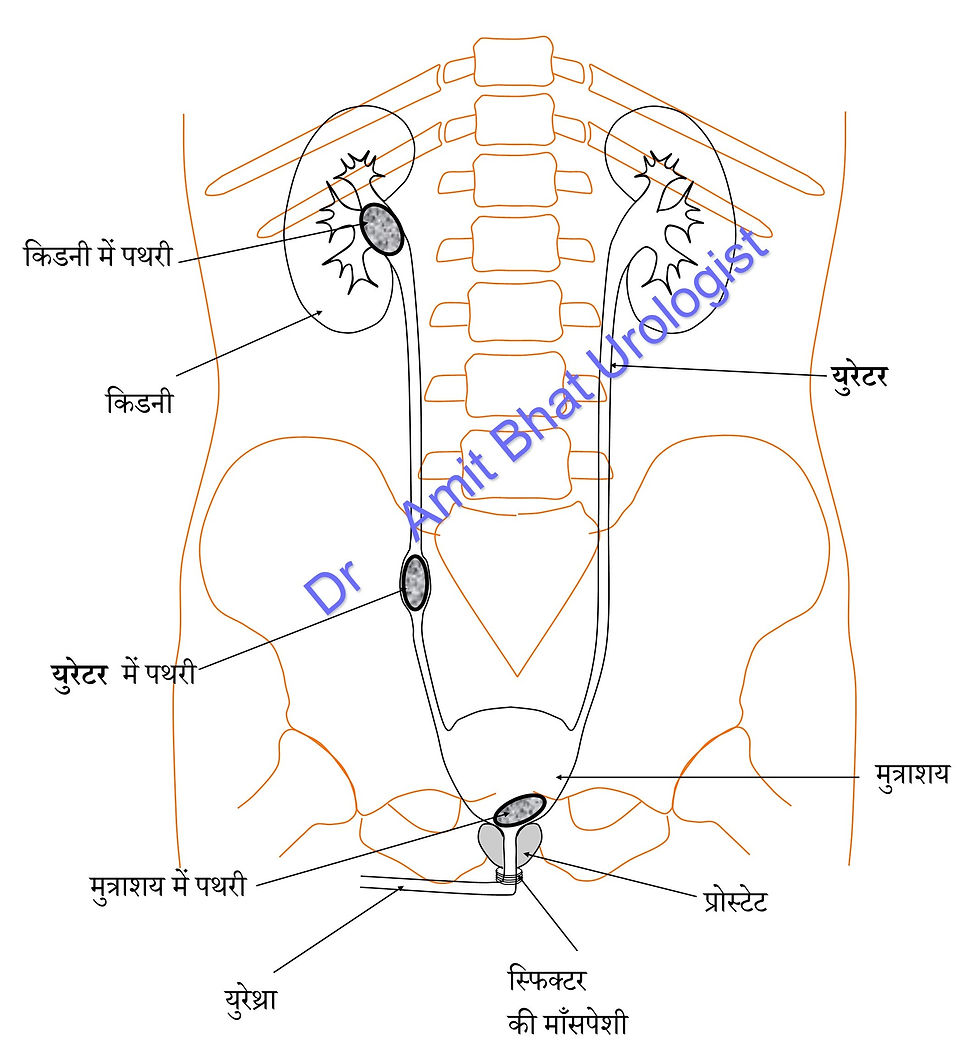
Like urine, the stones also form in the kidney. The stones start as small crystals and then slowly increase in size. A lot of times these stones pass out harmlessly. If these stones do not pass out of the kidney, they may need to be removed.
Hydrotherapy Treatment
What is Hydrotherapy?
Hydrotherapy involves giving intravenous fluids (normal saline) along with diuretics (medicines that increase the urine production). The idea is increased urine output will flush the stone out of the body.
Does Hydrotherapy work?
It is my opinion that hydrotherapy works in a small percentage of cases. It will probably not work in cases of bigger stones say larger than 10 mm. Stones smaller than that would probably pass out naturally. This is because the urinary tube (ureter) has a muscle layer that will pump the stone forward. If the muscular pumping action of ureter is not working to push the stone out hydrotherapy is not likely to help either.
One practical question which needs to be answered is "How many days should the hydrotherapy be tried?"
Extracorporeal Shockwave Lithotripsy (ESWL)
ESWL is Not LASER
A lot of people mistake Lithotripsy for Laser. While both are energy sources used to break the stones, Lithotripsy is NOT same as LASER.
A lot of times patients prefer Lithotripsy because it is not regarded as a surgery.
How does Lithotripsy Work?
The sunlight cannot burn the paper. But if focused with a lens, the sunlight can burn the paper. A shock wave is generated by an energy source. This is very weak energy and will not break the stone. One type of lens is used that focuses the energy on the stone. This will slowly break the stone into smaller pieces. These pieces are expected to pass out harmlessly.
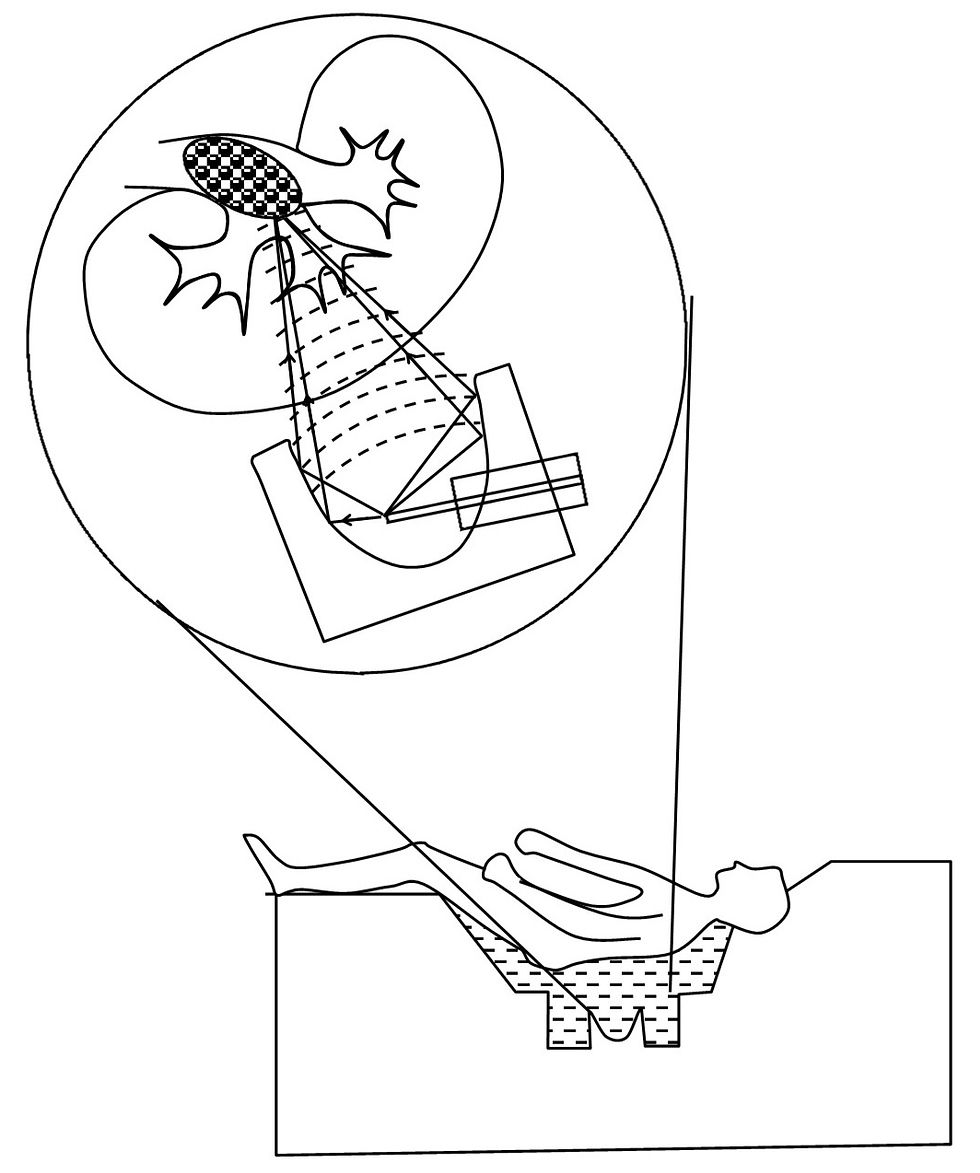
Disadvantages of ESWL
The results are not predictable. It has a success rate of around 70-75%.
Bigger stone harder stones will not break.
The kidney also suffers from the trauma.
This will show up as blood in the urine.
While most the time kidneys recover completely, some people may develop increased blood pressure years later following lithotripsy.
Lithotripsy will not be suitable for patients on blood thinners.
If the stone has broken but the piece is not large enough to pass out, a second session of lithotripsy may be needed.
A plastic tube (Double J stent) may be placed in the kidney to help with passage of stones and pain associated the passage of stone fragments can be avoided.
Recovery after Lithotripsy
Patients can go home on the same day after the procedure. They may have a little pain on that side of abdomen and may pass reddish urine (blood) for a few days. This is perfectly normal.
They can resume their normal activity in 2–3 days.
Patients are asked to maintain good amount of fluid intake. This helps clear the blood in urine and may also help flush out the stone fragments.
Some pain may be felt as the stone fragments pass down the ureter. This will clear spontaneously.
Better Alternatives
Lithotripsy has been around for more than 50 years now. There are better options available now including the actual laser.
Endoscopy for stone removal
Endoscopy means inserting a small sized endoscope (telescope) into the body. The size can be as small as 2 millimeter in diameter. Modern endoscopes are generally no bigger than 8 mm in diameter.
Options include:
Ureteroscope (URS)
Percutaneous Nephrolithotripsy (PCNL/PNL)
Retrograde Intrarenal Surgery (RIRS)
Stones in the ureter are tackled using ureteroscopy. Whereas the stones in kidney are managed with PCNL or RIRS. Larger kidney stones (greater than 2.5 cm) are generally tackled by PCNL. Stones smaller than that can be tackled by RIRS also.
Ureteroscopy (URS)
A very fine 2mm endoscope called ureteroscope, is inserted through the urethra and bladder up to the ureter. Once the stone is seen, it can be pulled out using a small basket. Bigger stones need to be broken down into smaller pieces prior to removal. A DJ Stent may need to be placed after the surgery.
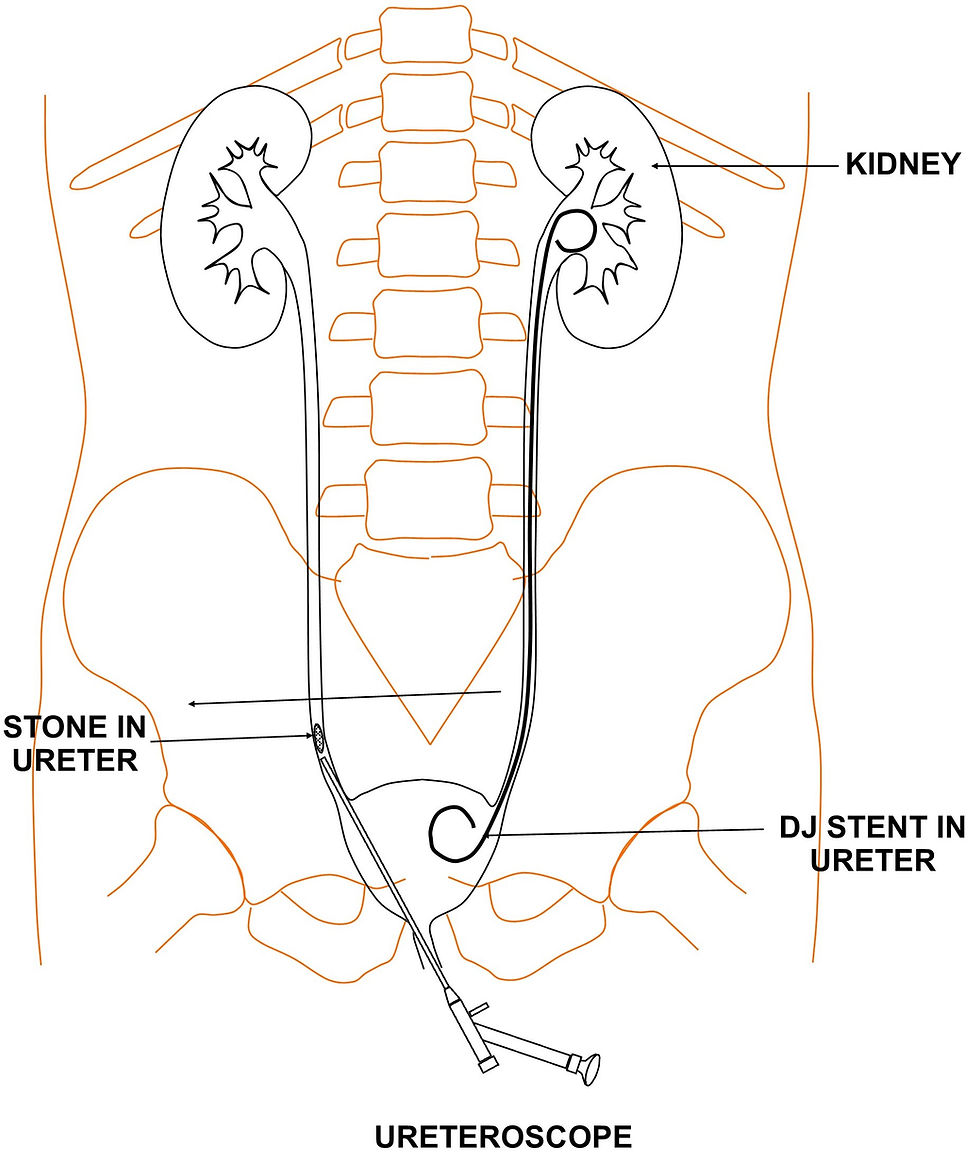
Recovery after URS
After the procedure, patients can go home the next day. They may have a little pain in the sides and may pass reddish urine (blood) for a few days. This is perfectly normal.
They can resume their normal activity in 2–3 days.
Patients are asked to maintain good amount of fluid intake. This helps clear the blood in urine and may also help flush out the stone fragments.
If DJ stent has been placed patient may have some bladder irritation in form of needing to pass urine frequently, rushing to pass urine pain while passing urine. This generally eases up in a few days’ time.
URS -Safety
Modern fine ureteroscopes have made this an extremely safe procedure. The chance of complication is no more than 1 in a hundred.
Percutaneous nephrolithotomy (PCNL)
PCNL is chosen for large stones in the kidney. With the patient lying on his stomach, a small half a centimeter incision is made in the upper back region. From this incision the kidney is targeted, and a track is made to reach the stone. Then an endoscope called Nephroscope is inserted to see the stone break it and remove it.
After the procedure is completed, a DJ stent may need to be placed along with a tube coming out of the side of body.

Recovery after PCNL
After PCNL, patients usually spend 3-4 days in the hospital. X-rays may be done after surgery to check that all the stone fragments have been removed.
Small fragments less than 3-4 mm are not significant and do not need to be removed. However, if a fragment is large, say 8-9 mm, this will need to be tackled with a second procedure. This generally happens in case of a large complex stone.
If a second procedure is not planned, the tube coming out of the flank is removed and the patient can be discharged. They are advised to resume their normal activity after 1-2 weeks.
PCNL – Safety
While generally safe, PCNL does have complications. Most important among them is severe bleeding that may need blood transfusion.
Retrograde Intrarenal Surgery (RIRS)
A special flexible endoscope that can be bent at the tip, is inserted through the urethra and bladder up to the ureter. The flexibility & maneuverability allows it to reach into various corners of the kidney. Once the stone is seen, it is powdered with help of laser.

Recovery after RIRS
After the procedure, patients can go home the next day. They may have a little pain in the sides and may pass reddish urine (blood) for a few days. This is perfectly normal.
They can resume their normal activity in 2–3 days.
Patients are asked to maintain good amount of fluid intake. This helps clear the blood in urine and may also help flush out the stone fragments.
If DJ stent has been placed patient may have some bladder irritation in form of needing to pass urine frequently, rushing to pass urine pain while passing urine. This generally eases up in a few days’ time.
Safety of RIRS
Modern fine flexible ureteroscopes have made this an extremely safe procedure. The chance of complication is no more than less than 5 percent. While expensive due to the technology involved, it is much safer than PCNL.
Risks / Complications of various Treatment Modalities
Some risks that can be associated with all surgical procedures are the possibility of bleeding and infection.
Little bit of bleeding is expected with all the procedures. However, it is extremely rare that Lithotripsy and URS will cause any major bleeding. The risk of major bleeding needing blood transfusion is higher with PCNL.
In URS, there is a small possibility that the ureteral wall could be damaged or torn during the procedure. If this occurs, placement of a stent for two to three weeks is usually sufficient to allow the damaged area to heal. A complete tear of the ureter is very rare and requires open surgery to repair the tear.
When PCNL is performed, there is a small chance of air or fluids can accumulate in the chest around a lung if the access channel to reach the kidney passes from the upper part of kidney. These entities are treated with a chest tube, which allows drainage of the fluid from around the lung. Other rare complications include injury to the bowel and injury to blood vessels within the kidney.

Comments